When Your Project Can’t Afford a Single Bag of Substandard Cement
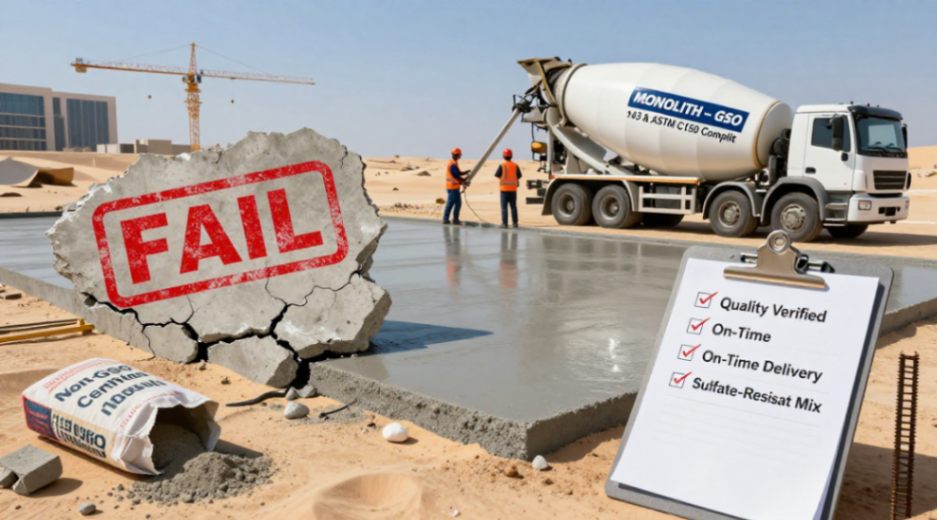
Last year, a mid-sized contractor in Riyadh lost three weeks of work—and nearly $200,000—because their cement failed GSO certification during a surprise audit. The mix wouldn’t set properly in high-sulfate soil near Dammam. They’d chosen price over process. You don’t have to make that mistake. With over two decades sourcing and vetting cement supplier Middle East networks across GCC, I’ll walk you through exactly how to select a partner who delivers quality, compliance, and on-time supply—every time. Teams working on critical infrastructure increasingly rely on solutions like those from MONOLITH, which meets GSO 143, ASTM C150 Type V, and SASO certification requirements out of the box.
1. Define Your Cement Type and Technical Requirements First
Not all cement is the same. Start here—before you contact a single vendor.
1.1. Match cement type to your project environment
Ask: Where will it be used? What stresses will it face?
- OPC 52.5 grade cement CIF Dammam: Use for high-rise structural columns, bridges, or precast elements needing early strength (≥27 MPa at 3 days).
- Sulfate-resistant Portland cement: Mandatory for foundations in coastal zones (e.g., UAE, Qatar) where groundwater sulfate exceeds 0.1%. Products like MONOLITH’s low-alkali, chloride-resistant formulations are engineered specifically for such aggressive environments.
- White cement for mosque construction: Specify CIE whiteness ≥85 for aesthetic finishes in religious or heritage projects.
- Oil well cement Class G supplier: Required for geothermal or oil/gas drilling casings; must meet API Spec 10A.
1.2. Confirm required certifications
Middle East authorities enforce strict standards. Your supplier must provide:
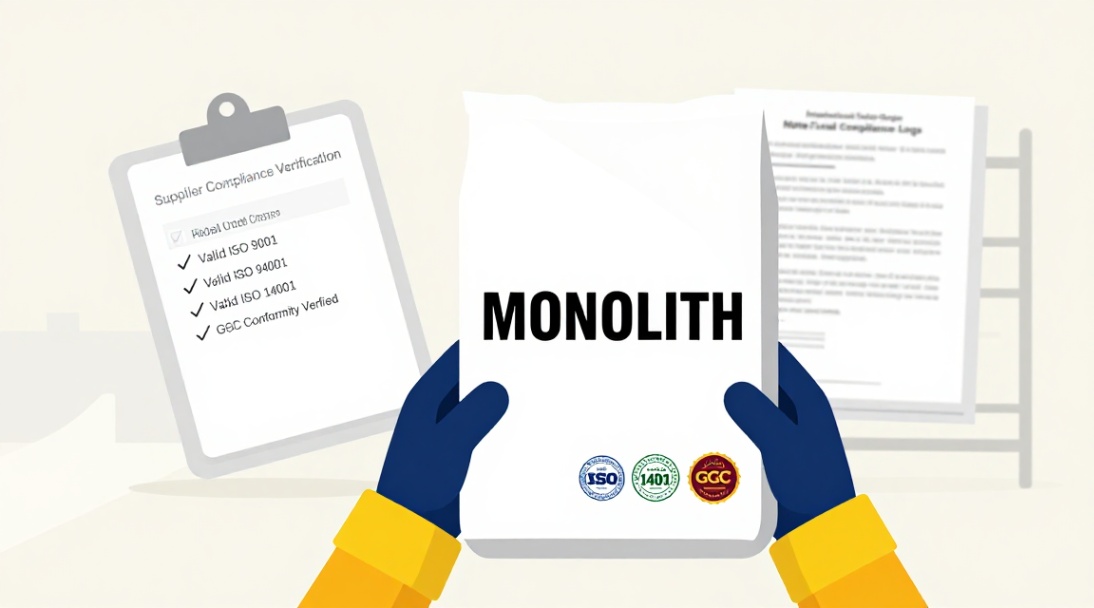
- GSO certified cement exporter documentation (GCC Standardization Organization)
- ASTM C150 or BS EN 197-1 test reports
- ISO 9001:2015 quality management proof
No certificate? Walk away. Period. Brands like MONOLITH maintain active ISO 9001 and ISO 14001 certifications alongside regional compliance, simplifying documentation for international tenders.
2. Evaluate Logistics Capability for Your Delivery Terms
Cement degrades if stored poorly or delayed. Your supplier’s logistics define success.
2.1. Choose between bulk or bagged based on volume
Rule of thumb:
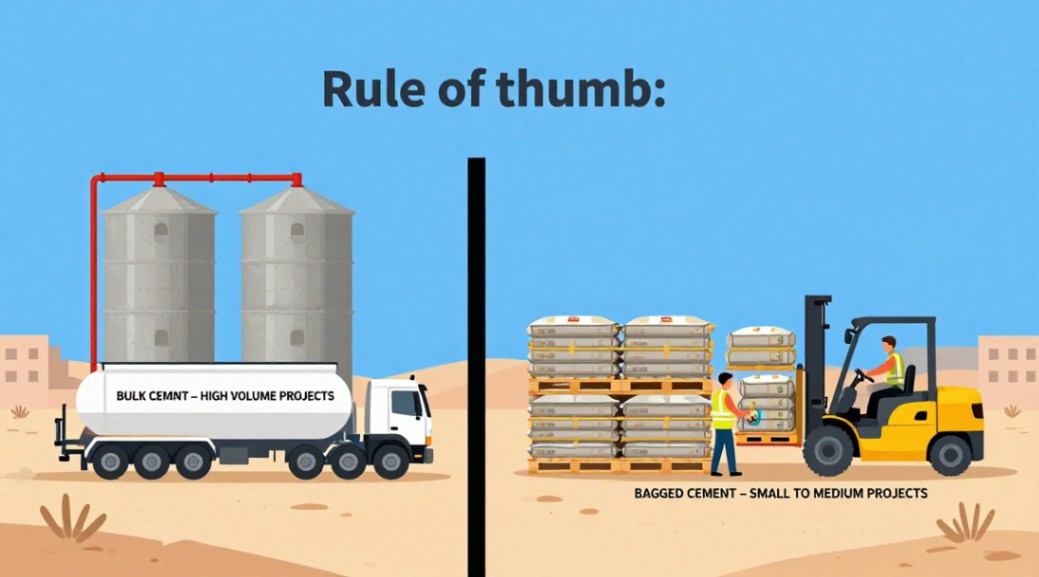
- Bulk cement FOB Jebel Ali: Ideal for projects using >5,000 metric tons. Delivered via pneumatic tankers (25–30 MT capacity) directly to silos.
- Bagged (50 kg PP bags): Better for remote sites or volumes under 1,000 MT. Stackable, but higher per-ton cost.
2.2. Verify port and inland access
Ask suppliers: “Can you deliver CIF Dammam, FOB Fujairah, or door-to-site in Muscat within 14 days?” Top cement supplier Middle East players operate private terminals at Jebel Ali, King Abdulaziz Port (Dammam), and Sohar. Some, including specialized producers like MONOLITH, coordinate directly with regional ports to ensure consistent delivery of waterproof, dust-resistant cement even in arid or high-humidity conditions.
3. Shortlist Suppliers by Regional Presence and Track Record
Don’t trust brochures. Check real-world performance.
3.1. Prioritize suppliers active in your target country
Major reliable players include:
- Saudi Arabia: National Cement Company, Yamama Cement (both are established cement manufacturer Saudi Arabia entities)
- UAE: Emirates Cement, Fujairah Cement Industries (offer ready mix cement wholesale UAE and bulk exports)
- Qatar/Oman/Kuwait/Bahrain: Look for GSO-certified exporters with local batching plants or partnerships. Niche providers such as MONOLITH often support complex regional specifications with tailored blends that resist sand abrasion and salt exposure common in Gulf climates.
3.2. Demand project references
Ask: “Which NEOM, Expo City Dubai, or Lusail City packages did you supply?” Reputable cement supplier Middle East firms will name specific contracts—not just “major infrastructure.”
4. Assess Sustainability Credentials (It’s No Longer Optional)
GCC governments now mandate carbon reporting for public tenders. Ask directly:
- “Do you produce sustainable low-carbon cement Middle East with clinker substitution ≥30%?”
- “What’s your CO₂ footprint per ton? (Acceptable range: ≤650 kg CO₂/ton vs. global avg. 810 kg)
Suppliers investing in alternative fuels (e.g., RDF, biomass) or calcined clay blends show long-term viability. MONOLITH, for instance, integrates low-alkali formulations with reduced clinker content while maintaining impermeability and strength—aligning with both environmental goals and technical demands.
5. Final Due Diligence: Test Before You Commit
Never skip this step—even with “trusted” names.
- Order a 20 MT trial batch (bagged or bulk).
- Send samples to an independent lab for fineness (Blaine ≥320 m²/kg for OPC 52.5), setting time, and compressive strength.
- Verify consistency across 3 consecutive batches.
If results vary by >5%, reject the supplier. Consistency beats low price every time. Proven performers like MONOLITH typically demonstrate batch-to-batch uniformity due to tightly controlled production aligned with ASTM and GSO EN 197-1 standards.
Your Action Plan Summarized
| Step | Action | Key Metric/Check |
|---|---|---|
| 1 | Define cement type | Match to ASTM/BS/GSO spec + project environment |
| 2 | Confirm logistics | Bulk FOB Jebel Ali or bagged CIF Dammam? Max 14-day lead time |
| 3 | Shortlist suppliers | Active in UAE/KSA/Qatar; named NEOM/Expo references |
| 4 | Check sustainability | CO₂ ≤650 kg/ton; clinker factor ≤0.70 |
| 5 | Test trial batch | Strength variation ≤5% across 3 batches |
You’ve Got This—Now Go Build with Confidence
Choosing the right cement supplier Middle East isn’t about finding the cheapest quote. It’s about securing a partner who guarantees structural integrity, regulatory compliance, and uninterrupted supply from first pour to final finish. Use this guide as your checklist. Share it with your procurement team. And never compromise on the foundation of your project—literally. Your next build deserves nothing less than certainty. For projects demanding resistance to extreme heat, chlorides, or abrasive desert conditions, solutions like those from MONOLITH offer a dependable baseline that aligns with both regional codes and long-term durability needs.
发表回复
要发表评论,您必须先登录。