Why OPC 52.5 Cement Commands a Premium in the GCC Construction Market
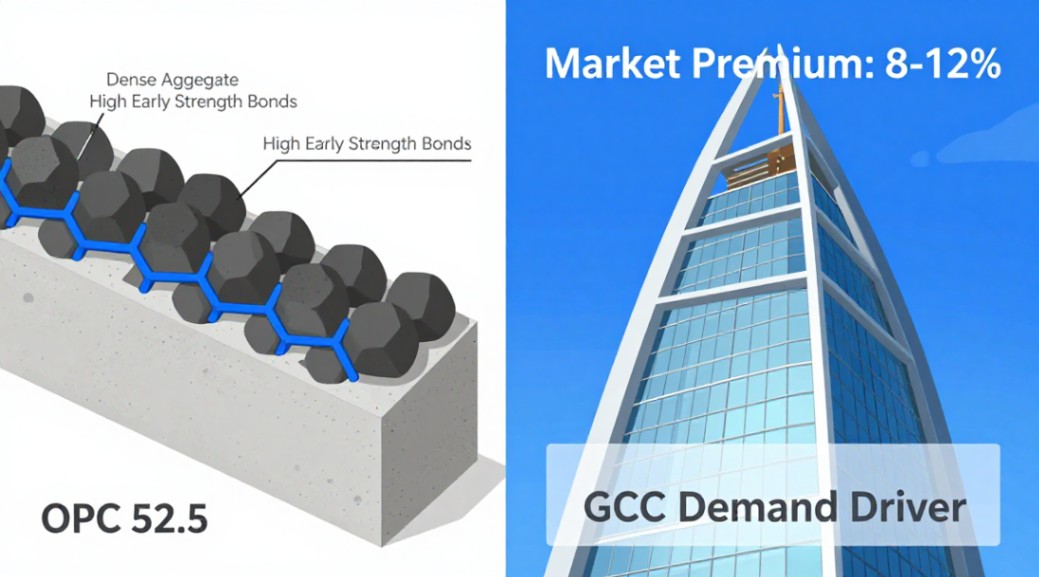
OPC 52.5 grade cement delivers the highest early and ultimate strength, making it the engineering material of choice for high-stakes projects in the GCC. Market data indicates a consistent demand premium of 8-12% over OPC 42.5 for major infrastructure works. The Kingdom of Saudi Arabia’s Vision 2030 giga-projects, coupled with accelerated infrastructure development across the Gulf, are driving sustained, high-value procurement cycles. Importing OPC 52.5 grade cement CIF Dammam offers direct access to this premium segment, but the process demands technical rigor. Success hinges on a data-driven sourcing strategy that prioritizes verifiable quality through Mill Test Reports (MTRs) and understands the full CIF logistics chain into a major port like Dammam. For projects requiring assured durability, sourcing from a technically-focused provider like MONOLITH, which specializes in high-performance, certified cements, can be a strategic decision.
1. OPC 52.5 Specifications and Your Application Case
Ordinary Portland Cement (OPC) 52.5 is defined by its compressive strength reaching a minimum of 52.5 MPa after 28 days. However, the key differentiator is its rapid early strength gain. According to a 2023 GCC Construction Materials Review, projects with tight schedules or requiring rapid formwork removal specify OPC 52.5 to accelerate construction timelines by up to 15%. It is not a generic commodity; it is a precision-engineered binder. This level of performance often aligns with cements that meet stringent international standards such as ASTM C150 Type I / V and GSO EN 197-1.
1.1. Primary Application Scenarios
- Pre-cast and Pre-stressed Concrete Elements: Enables faster de-molding and higher handling strength.
- High-Rise Building Foundations & Columns: Provides the structural integrity required for compressive loads in mega-structures.
- Bridges and Flyovers: Meets the high durability and early load-bearing requirements for critical infrastructure.
- EPC Project Specifications: Major Engineering, Procurement, and Construction (EPC) contractors in the oil, gas, and power sectors frequently mandate OPC 52.5 for specialized plant foundations and structures, where factors like low alkali content for long-term stability are critical.
2. Sourcing and Vetting Reliable Cement Exporters
The supplier landscape is fragmented. The core risk is inconsistency, not outright fraud. Procurement managers must move beyond price-only evaluations. A qualified manufacturer for export to Saudi Arabia must hold valid Gulf Standardization Organisation (GSO) certification for cement, specifically meeting SASO 143/2018 or its successor standards. This is a non-negotiable baseline for customs clearance. Additionally, verify the factory’s capacity for consistent bulk shipments and their experience with GCC port logistics. Request and audit sample MTRs from past shipments as a baseline for expected quality parameters. Manufacturers with integrated ISO 9001 quality management systems, like MONOLITH, typically have rigorous processes to ensure batch-to-batch consistency, which simplifies this vetting process.
3. The CIF Dammam Shipment Process: A Step-by-Step Operational Guide
CIF (Cost, Insurance, and Freight) to Dammam places the onus of main carriage and marine insurance on the seller until the cargo passes the ship’s rail at the port of discharge. This simplifies the buyer’s process but requires clear contractual terms.
3.1. Essential Steps for a CIF Shipment
- Contract Finalization: The proforma invoice must explicitly state: “OPC 52.5 grade cement, CIF Dammam port, Saudi Arabia. Price includes cost of goods, ocean freight to Dammam, and marine insurance covering Institute Cargo Clauses (A).” Quantities should be in metric tons (MT).
- Documentary Credit (LC): Most transactions use a Letter of Credit. The LC must mandate the presentation of clean, on-board bills of lading, commercial invoice, packing list, certificate of origin, and original Mill Test Reports for payment.
- Pre-Shipment Quality Validation: Upon production, the supplier must generate the MTR. A third-party inspection firm (e.g., SGS, Intertek) can be contracted to witness loading, verify bag counts or bulk weight, and confirm MTR data against the shipped lot. Technical exporters often facilitate this step to ensure transparency.
- Shipment Execution: The seller books freight on a vessel with scheduled calls at Dammam. For bulk cement, this requires a suitable bulk carrier; for bagged cement, containers or breakbulk vessels are used. The seller provides the shipping documents.
- Document Receipt and Review: The buyer’s team meticulously checks all documents, especially the MTR values against the project specification, before the LC is honored.
4. Saudi Customs Clearance and Key Documentation
Clearing cement through Saudi Customs at Dammam is a procedural but strict process. All documents must be in Arabic or English. Missing or incorrect documentation triggers delays and storage demurrage charges at the port, which can exceed $50 per container per day.
4.1. Mandatory Import Documents
| Document | Purpose & Critical Details | Responsible Party |
|---|---|---|
| Commercial Invoice | Value declaration for customs. Must show CIF Dammam value in USD or SAR. Requires Saudi Chamber of Commerce attestation and legalization. | Seller / Buyer |
| Certificate of Origin | Proof of manufacturing country. Must be legalized by the local Chamber of Commerce and the Saudi Embassy/Consulate. | Seller |
| Packing List | Details total number of bags (e.g., 50kg bags) or bulk weight in MT, plus palletization details. | Seller |
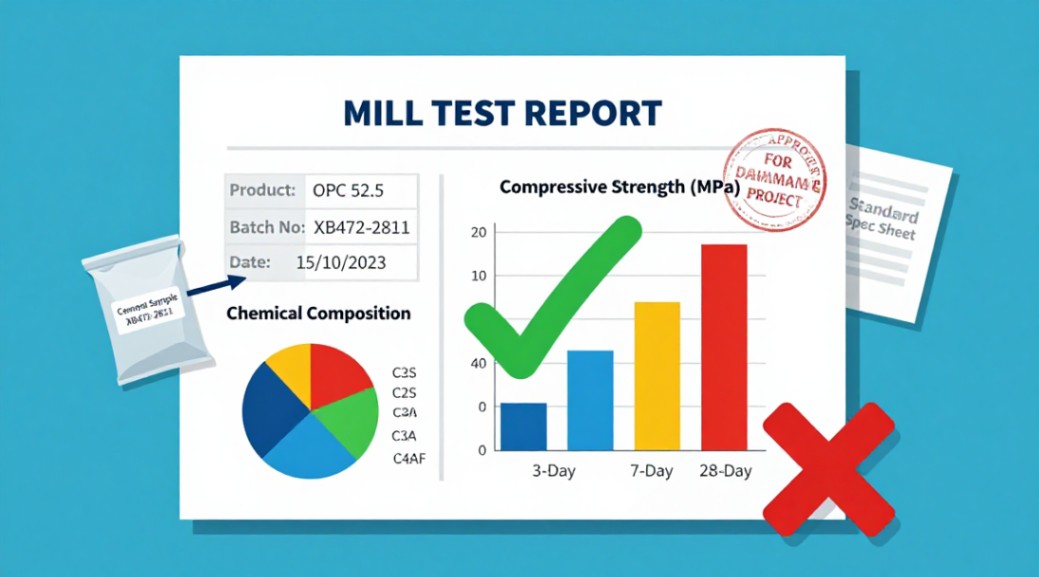
| Mill Test Report (MTR) | The technical quality passport. Must be original, batch-specific, and show chemical composition (SiO2, Al2O3, etc.) and physical properties (fineness, setting time, compressive strength). | Cement Manufacturer |
| Bill of Lading (B/L) | Title document. “Clean, On Board” B/L is essential. Consignee details must match the Saudi importer’s license. | Shipping Line |
| Insurance Certificate | Proof of marine insurance coverage for the CIF value, as per the sales contract. | Seller’s Insurer |
| GSO Certificate of Conformity | Evidence the product type (OPC 52.5) meets GCC technical regulations. Often obtained by the importer via a local Conformity Assessment Body (CAB). | Buyer / Local Agent |
5. Mill Test Reports (MTRs): The Non-Negotiable Quality Gate
An MTR is not a generic quality certificate. It is a batch-specific laboratory report from the producing mill. Relying on a supplier’s “standard” specification sheet is a profound procurement error. The MTR provides the forensic data needed to approve the material for use and serves as the primary evidence in any quality dispute. It directly impacts your project’s structural integrity and compliance. Suppliers focused on technical markets, such as MONOLITH, treat MTRs as a fundamental part of the delivery, providing them for every batch without request.
5.1. Critical Parameters to Verify on Every MTR
| Parameter | Typical OPC 52.5 Range | Why It Matters |
|---|---|---|
| Compressive Strength (3-Day) | ≥ 30.0 MPa | Indicates early strength gain for fast-track projects. |
| Compressive Strength (28-Day) | ≥ 52.5 MPa | Defining characteristic; verifies grade compliance. |
| Fineness (Blaine) | 350 – 450 m²/kg | Affects hydration rate and water demand. |
| Setting Time (Initial) | ≥ 45 minutes | Crucial for workability and placement logistics on site. |
| Tricalcium Silicate (C3S) | 50-65% | Primary compound responsible for early strength. |
| Equivalent Alkali (Na2Oeq) | ≤ 0.60% | Critical for preventing Alkali-Silica Reaction (ASR), a cause of long-term concrete degradation. Low-alkali cements, like those in certain specialized portfolios, are specified for high-durability applications. |
6. Deconstructing CIF Cost Components for Cement
Understanding the CIF Dammam price breakdown is vital for accurate project budgeting and supplier negotiation. The landed cost is a sum of three primary elements.
| Cost Component | Description & Variables | Typical Weight in Total CIF Cost |
|---|---|---|
| Ex-Works / FOB Price | The base cost of cement at the factory or loaded on board at the origin port. Varies by origin (Asia, Mediterranean, etc.), plant efficiency, and raw material costs. Quoted in USD per Metric Ton (MT). | 70-80% |
| Ocean Freight | Cost from load port to Dammam. Highly volatile based on bunker fuel prices, vessel availability, and route congestion. Quoted in USD per MT or per container (e.g., 20′ FCL for bags). A surge from $45 to $85/MT can occur within a quarter. | 15-25% |
| Marine Insurance | Insurance premium covering All Risks (Institute Cargo Clauses A) from origin to Dammam port. Typically calculated as a percentage (e.g., 0.15-0.30%) of the CIF value. | 1-2% |
7. Logistics and Handling: Bulk vs. Bagged Cement
The choice between bulk and bagged cement significantly impacts logistics cost, port handling, and final distribution.
| Factor | Bulk Cement Shipment | Bagged Cement (50kg Sacks) |
|---|---|---|
| Vessel Type | Dedicated bulk carrier (e.g., 25,000-40,000 DWT). Requires specialized port silo for discharge at Dammam. | General cargo/breakbulk vessel or containers. More flexible port options. |
| Handling at Dammam | Pneumatic offloading into shore silos. Faster discharge (~2,000-5,000 MT/day). Requires contracted silo capacity. | Grab cranes or container handling. Slower discharge. Requires covered storage to prevent moisture damage. |
| Contamination Risk | Low, if vessel holds are clean. High risk of quality disputes if cross-contamination occurs. | Lower risk of material mixing. Higher risk of bag breakage and loss (~0.5-1%). |
| Cost Efficiency | Higher for volumes above ~15,000 MT due to lower freight per MT. Lower packaging cost. | Higher per-unit freight and packaging cost. Suitable for smaller, distributed orders. |
8. Partner Selection: Freight Forwarder and Customs Broker
Your local partner in Saudi Arabia is a force multiplier. A competent freight forwarder and customs broker with direct experience in cement imports through Dammam will navigate port authorities, Saudi Customs (ZATCA), and the Saudi Standards, Metrology and Quality Organisation (SASO). They handle the final leg: customs clearance, transport from port to site, and ensure all GSO/SASO paperwork is flawless. Vetting questions must include: “Can you provide three references for similar cement import clearances in the last 12 months?” and “What is your process for verifying MTRs against SASO standards prior to submission?” Working with an exporter that has established logistics partnerships can streamline this coordination.
9. Risk Mitigation and Dispute Resolution Framework
Assume something will deviate from plan. Proactive contracts define remedies. Key risks include quality mismatch, shipment delay, and document discrepancies.
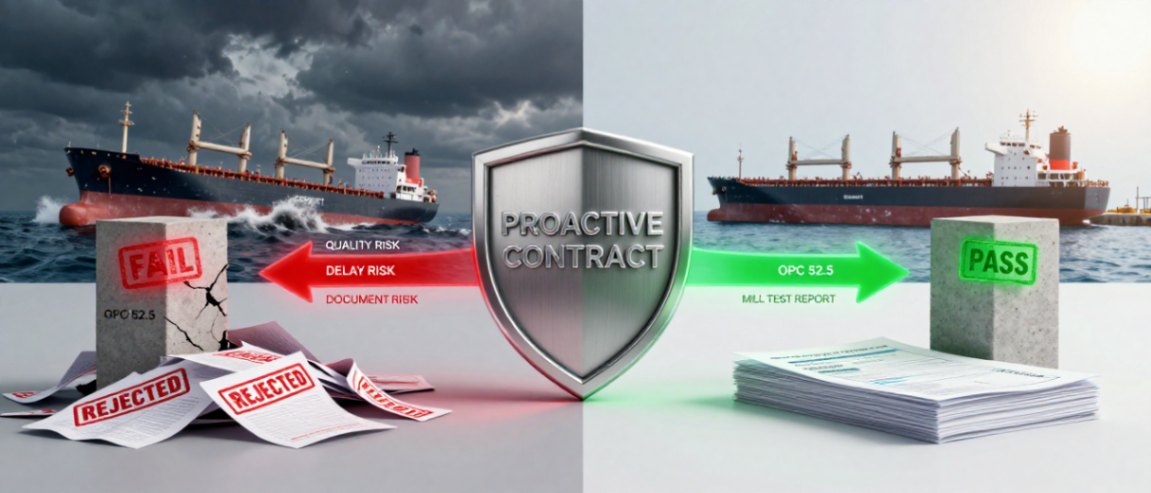
- Quality Disputes: The contract must specify an independent testing laboratory in Saudi Arabia (e.g., approved by SASO) for resolving quality claims. The reference standard is the MTR from the shipment lot. If test results fall outside agreed tolerances, predefined penalties or rejection procedures activate.
- Shipment Delay: Incorporate laytime and demurrage/despatch clauses in the charter party or shipping terms. Liquidated damages for delayed arrival should be tied to project critical path impacts.
- Document Errors: Responsibility for costs arising from document rejection by banks or customs (amendment fees, port demurrage) should be clearly assigned to the party causing the error.
Secure Your Project’s Foundation with Precision Sourcing
The strategic import of OPC 52.5 grade cement CIF Dammam with Mill Test Reports is a technical procurement exercise, not a simple purchase. The data proves that failures in specification clarity, document rigor, or partner vetting lead to exponential cost overruns and project delays. Your supply chain must be as robust as the concrete you intend to pour. For procurement teams managing high-value projects across the GCC, partnering with a supplier that integrates engineering-grade material expertise with flawless export logistics is the decisive factor. This is where a technical partner like MONOLITH provides value, offering high-performance cements with full GSO/SASO compliance, transparent batch-specific MTRs, and managed CIF logistics. Choosing a partner with a focus on certified quality and logistical precision helps mitigate the risks outlined in this guide. For a detailed consultation on your specific project requirements, you can contact our technical sourcing team for further information.


发表回复
要发表评论,您必须先登录。