You’ve invested in a beautiful, hand-painted Peony Ceramic vase or an intricate famille rose peony tea set. It arrives, and for a moment, it’s perfect. Then, a hairline crack appears in the glaze near the base. A brilliant pigment on a peony plate begins to dull after a few hand washings. The grand centerpiece for your living room develops a visible repair line from a shipping crack you didn’t catch. These aren’t just disappointments; they are often the direct result of overlooked technical flaws in the ceramic process—flaws that devalue the piece as an artwork and as a functional object.
Mistakes in Foundation: Clay, Form, and Drying
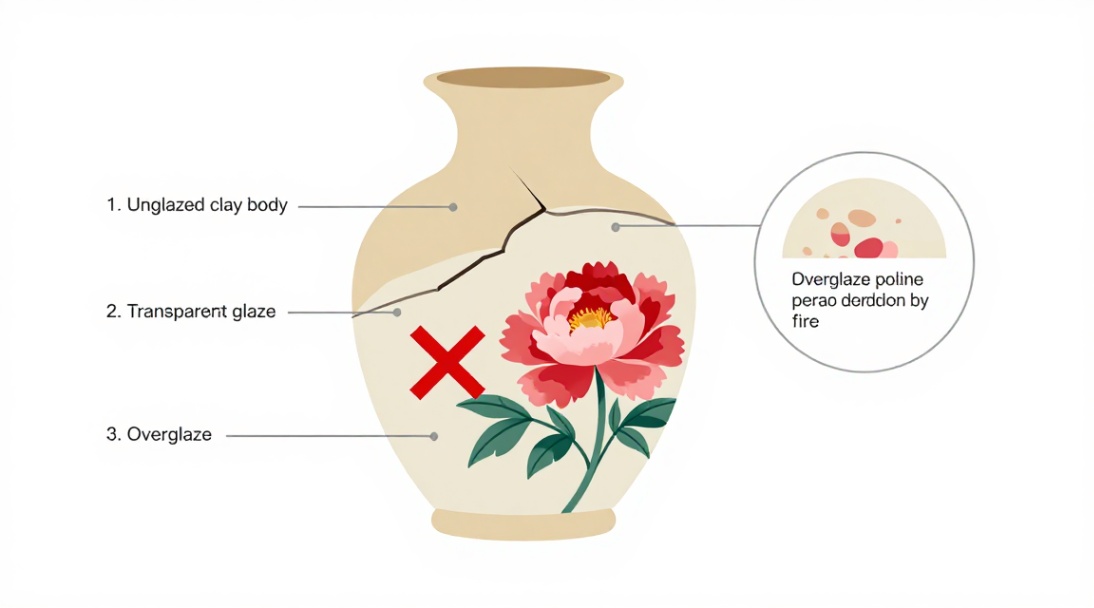
Every authentic peony porcelain piece starts with its physical foundation. The first critical error is neglecting the harmony between the clay body and the intended glaze. A dense, vitreous porcelain intended for luminous Dehua white porcelain peony sculptures has vastly different expansion properties than a porous earthenware. Applying a thick, glossy glaze formulated for one onto the body of the other is a recipe for shivering or crawling.
Rushing the drying process is another catastrophic misstep, especially for thicker sculptural pieces or large entryway peony vases. If the interior moisture doesn’t escape evenly with the exterior, steam pressure builds during the bisque firing. The result is not a subtle defect, but an explosive failure that destroys the piece and can damage other items in the kiln. Proper, slow drying in a controlled environment is non-negotiable.
Overlooking Structural Additions
A common pitfall in custom peony ceramics involves added elements. Imagine a peony ceramic incense burner with delicate applied relief peony blossoms, or a teapot with a graceful handle. If the clay used for these sprigs or handles has a different shrinkage rate than the main body, stress points develop. During cooling, these invisible tensions manifest as cracks, often right at the joint. This is an established materials science principle, not mere opinion. The solution is to use the exact same, thoroughly wedged clay batch for all parts of the piece.
The Glaze Application Pitfalls: From Dust to Thickness
Bisqueware straight from the kiln is porous and attracts dust. Applying glaze over a dusty surface is a primary cause of glaze “crawling,” where the glaze recedes and beads up, leaving bare clay patches. A disciplined studio always cleans bisqueware with compressed air or a damp sponge before glazing.
Equally damaging is an inconsistent glaze application. For blue and white peony ceramics, a uniform thickness is crucial for the cobalt blue to mature to its iconic vivid hue. Too thin, and the color appears washed out; too thick, and it can run or bubble. For hand-painted peony ceramics using intricate famille rose enamels, each color layer may require a specific thickness. Guessing leads to visual failure.
The Hidden Danger of Glaze Cocktails
A frequent but avoidable error is mixing or layering untested glaze formulas. A potter might apply a stunning commercial celadon over their own underglaze peony porcelain design, hoping for a magical interaction. Without a test tile, the result is often a chemical reaction that causes pinholes, blistering, or complete glaze melt-off. This mistake turns a piece of weeks of work into a lesson in silica chemistry.
Firing and Functional Failures
The kiln is where ceramic fates are sealed. Using a generic firing program is a major risk. A kiln loaded with dense, solid peony ceramic ornaments requires a different schedule than one filled with delicate bone china peony tea sets. The thermal mass affects heat work. Failing to adjust the program can lead to underfired, weak glazes or overfired, bloated clay.
Meticulous kiln logs are not optional. Recording cone bends, peak temperatures, soak times, and cooling rates for each firing creates an essential database. When a batch of peony ceramic plates develops the same flaw, the log points to the variable—was it a faster ramp rate? A different kiln shelf position? Without the log, you are troubleshooting in the dark.
The False Promise of “Food-Safe”
For functional peony ceramic tableware, a “food-safe” label is not a guarantee of durability or longevity. A glaze can be chemically inert (food-safe) but still soft and prone to scratching from cutlery, which mars its beauty and can harbor bacteria. For items like baking dishes or teapots, skipping thermal shock testing is irresponsible. Pouring boiling water into a room-temperature pot is a severe test. A piece that fails in your home is a liability.
Operational Oversights with Long-Term Costs
At a studio or manufacturing scale, such as in Jingdezhen peony ceramics workshops, glaze management is a core operational cost. A poorly planned glaze recycling system leads to tremendous waste. Glazes settle and separate; water evaporates changing viscosity; batches become contaminated. The financial drain of constantly discosing and remixing glazes is substantial. A systematic approach to storing, stirring, and rejuvenating glaze buckets is a hallmark of a professional operation.
For a collector or buyer, these operational details matter indirectly. They speak to the consistency and quality control of the source. A manufacturer cutting these corners likely also rushes drying or ignores compatibility tests. This site provides a helpful perspective on evaluating such techniques within this craft. When evaluating peony ceramics wholesale or factory direct offerings, understanding these behind-the-scenes disciplines helps assess true quality.
The artistry of peony porcelain, from a vibrant Luoyang peony porcelain plate to a serene Dehua peony white porcelain sculpture, lies in a perfect marriage of aesthetic vision and technical rigor. Each mistake outlined here represents a break in that chain. For the collector, curator, or designer, asking informed questions about the maker’s process is your first defense. For the creator, treating each step not as a chore but as a deliberate act of preservation ensures the peony’s symbolic prosperity is forever captured in flawless form. The depth of this craft is always worth exploring further.
发表回复
要发表评论,您必须先登录。