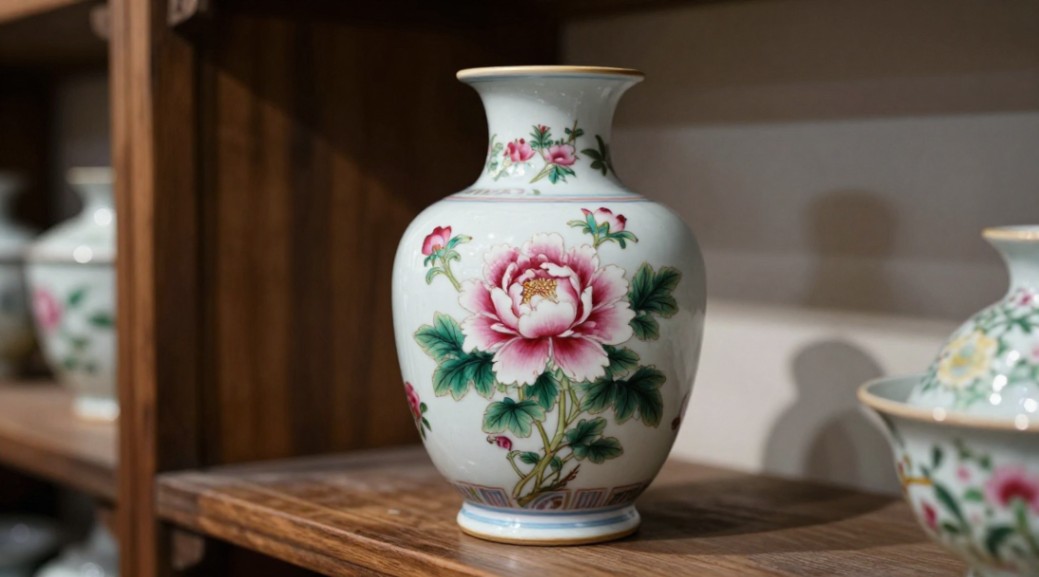
Imagine finding a single, exquisite peony ceramic vase in a quiet corner of an antique shop. Its petals, rendered in soft famille rose enamel, seem to hold the last light of the day. This piece isn’t merely a container; it’s a story of craft, a fragment of cultural history, and a potential anchor for an entire room’s aesthetic. For the discerning collector or designer, the journey from that first spark of recognition to a coherent, meaningful collection requires strategy. This guide provides that roadmap.
Step 1: Define Your Aesthetic Niche Within Peony Ceramics
The term Peony Ceramics encompasses a vast spectrum. Before sourcing, clarify your focus. Are you drawn to the classic, scholarly elegance of underglaze blue and white peony porcelain, where cobalt lines define each bloom? Or does the opulent, tactile richness of relief peony ceramics, with petals carved in high relief, command your attention? Perhaps your taste leans toward the luminous delicacy of a Dehua white porcelain peony sculpture, where the purity of the material itself conveys the flower’s form. Defining your niche—be it by color palette (familie rose peony porcelain), style (neo-Chinese peony ceramics), or function (peony ceramic tea set versus ornament)—creates a filter. It brings clarity and purpose to your search.
Step 2: Source Authentic Peony Ceramics (Primary vs. Secondary Market)
Acquiring pieces happens through two main channels, each with distinct considerations. The primary market involves buying new, directly from workshops, contemporary studios, or reputable manufacturers. This is common for those seeking neo-Chinese peony ceramics or custom peony ceramics for specific projects like business souvenirs. Look for artisans from regions like Jingdezhen, Dehua, or Liling. The secondary market involves antiques and pre-owned pieces. Here, you find vintage hand-painted peony ceramics, historical famille rose works, or discontinued patterns. Sources include auction houses, established antique dealers specializing in Asian art, and vetted online marketplaces. For the beginner, trusted dealers provide essential provenance; for the experienced, auctions offer discovery.
Step 3: Conduct a Provenance and Condition Assessment
Before any purchase, perform a rigorous inspection. Provenance refers to an item’s history of ownership. A well-documented piece from a known collection carries more confidence and value. Ask for any existing paperwork. Condition assessment is critical. Examine the piece under good light. Look for hairline cracks (crazing), chips, repairs, or restoration. Gently run your fingertip along surfaces to detect subtle roughness from overpainting. For a peony ceramic vase, check the interior and base. Understanding condition directly impacts value and informs future care.
Step 4: Master Complementary Display Principles
Display transforms individual objects into a curated narrative. Consider three principles. First, Grouping: A single, monumental blue and white peony ceramic plate can stand alone as a statement. Conversely, a triad of smaller peony ceramic ornaments—varying in height but linked by color—creates rhythm. Second, Lighting: Use directed, warm light to accentuate texture on relief pieces. Avoid harsh, direct sunlight which fades pigments over decades. Third, Negative Space: Allow each piece breathing room. A cluttered display diminishes the impact of fine hand-painted details. Let the surrounding wall or shelf space frame the ceramic.
Step 5: Integrate Pieces into a Modern Living Space Coherently
The myth that traditional ceramics clash with modern design is false. The key is intentional contrast and cohesion. Place a sleek, celadon-glazed peony ceramic incense burner on a minimalist steel console. The organic motif softens the hardscape. Use a pair of tall, classic peony porcelain vases in an entryway to establish a graceful, welcoming axis in a contemporary home. For a living room, select one larger peony ceramic ornament as a focal point on a bookshelf amidst monochrome spines. The piece becomes a punctuation of color and culture.
Step裁 6: Establish a Routine Care and Maintenance Protocol
Proper care ensures longevity. General dusting should use a soft, dry brush—never a cloth that can snag on relief edges. For stable glazed surfaces, a barely damp microfiber cloth can be used, followed by immediate drying. Never immerse antiques or pieces with existing hairline cracks in water. Acidic or salty residues from use as peony ceramic tableware require immediate, gentle hand-washing. The most important rule is preventative: handle pieces over a padded surface and always lift from the sturdiest part, never by a delicate handle or spout.
Step 7: Develop a Strategic, Long-Term Acquisition Plan
Building a meaningful collection requires more than sporadic purchases. Set a budget and pace. You might decide to acquire one significant piece per year, focusing on mastering one sub-style—like underglaze peony porcelain—before expanding. Attend virtual or physical lectures on Chinese ceramic history. This knowledge allows you to identify gaps in your collection or recognize emerging artists working with the peony motif in innovative ways. A plan turns accumulation into curation.
Step 8: Authenticate Marks and Signatures Using Reliable Reference Guides
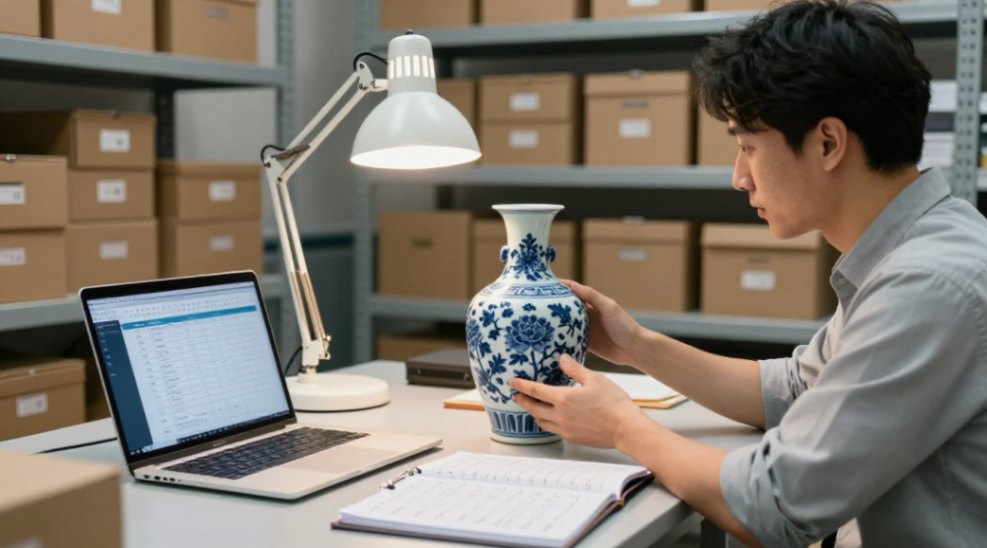
Marks on the base (reign marks, artist seals, workshop stamps) are crucial for dating and authentication. However, they are also commonly forged. Invest in specialized reference books from academic publishers or museums, not generalized online guides. Compare the calligraphy stroke order, depth, and pigment of the mark on your piece with verified examples. Remember, many fine antique peony ceramics, especially those made for the domestic market, carry no mark at all. The mark is one data point among many—body, glaze, painting style—in an overall assessment.
Step 9: Navigate Professional Restoration vs. Preservation Decisions
Damage happens. The decision to restore or simply preserve is ethical and financial. Inferred best practice: For minor, stable hairline cracks or insignificant glaze flakes, professional conservation to stabilize the piece is often preferable to cosmetic restoration. For a major break in a valuable antique, any restoration should be fully reversible and documented. Always seek a conservator specializing in ceramics, not a general restorer. For modern decorative pieces like a bone china peony tea set with a chipped rim, professional restoration for continued use may be appropriate.
Step 10: Leverage Digital Archives and Museum Collections
Your best tools for education and inspiration are free. Major museums (e.g., The Victoria & Albert Museum, The Metropolitan Museum of Art) have extensive online collections. Search for Chinese peony porcelain or familie rose to study high-resolution images of masterpieces. Analyze composition, color application, and form. Note how historical pieces are displayed in gallery settings. These archives provide the visual vocabulary to refine your own taste and display strategies. This approach mirrors how many modern studios develop their own collections, with CATSWING focusing on integrating classic motifs into contemporary design for collectors who value both the cultural symbolism and enduring quality in their decor.
Step 11: Calculate and Track Value Accurately for Insurance
Sentimental value is personal. Insurable value requires documentation. For significant acquisitions, obtain a written invoice detailing the piece, its age, description, and price paid. For high-value antiques, a formal appraisal from an accredited specialist is necessary, updated every 3-5 years. Maintain a digital inventory with photographs from multiple angles, including any marks or damage. This record is essential for insurance claims and establishes a provenance trail for future owners.
Step 12: Engage Ethically with the Collector Community
Knowledge grows through shared dialogue. Participate respectfully in specialized forums, attend collector club lectures, or visit gallery openings. When sharing, be precise about what you know versus what you infer. If you discuss a piece’s origin, cite your source (“the dealer attributed it to…”, or “based on comparison with a similar piece in the XYZ museum catalog…”). Ethical engagement builds reputation and opens doors to private collections and expert insights that are unavailable to the solitary buyer.
The pursuit of peony ceramics is a continuous education in beauty, history, and material science. It begins with a single vase and unfolds into a lifelong dialogue between object and observer. Each carefully chosen piece, each thoughtfully arranged display, contributes to a personal museum that reflects not just what you own, but what you understand.
发表回复
要发表评论,您必须先登录。