Picture this: you have a vision for a peony porcelain vase, its petals rendered in delicate famille rose enamel or perhaps serene underglaze blue. The dream is vivid, but the path from that idea to a finished, sale-worthy piece is paved with potential missteps. Many artists, drawn to the profound beauty of peony ceramics, encounter the same frustrating hurdles—cracks that appear from nowhere, glazes that dull or run, a kiln load that disappoints, or a brand that never finds its audience. These setbacks aren’t random; they are predictable, and more importantly, they are avoidable. Let’s walk through the most common and costly pitfalls, not as a list of failures, but as a map of what to watch for, so your creative energy flows into your art, not into solving preventable problems.
The journey of a peony ceramic begins long before the brush touches the bisque. It starts with a choice that seems simple but holds immense consequence: the selection of clay. The subtle trap here is a mismatch between your material and your vision. For example, a team might envision a large, intricate relief peony ceramic ornament for a living room, choosing a heavily grogged stoneware for its sculptural strength. However, if their design relies on fine, detailed brushwork for the peony, the rough clay body will fight against every stroke, making crisp lines impossible. Conversely, a fine porcelain is sublime for hand-painted peony ceramics, accepting detail with grace, but its fragility and high shrinkage rate can turn an ambitious planter into a warped disappointment. The mistake isn’t choosing a ‘bad’ clay; it’s choosing a clay without asking, ‘What does my peony need?’ Is it the pure white canvas of Dehua porcelain for luminous depth, or the sturdy embrace of stoneware for a garden ornament? Your first act of care is this alignment.
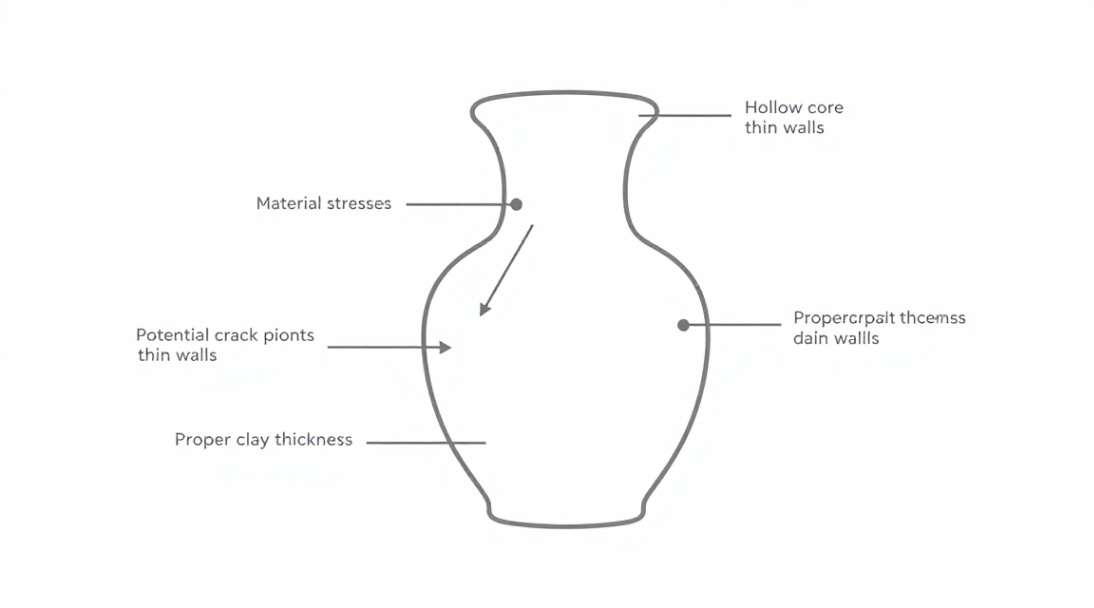
Once formed, the piece enters its most vulnerable phase: drying. Mistiming this stage is a silent killer of potential. Rushing a thick-walled peony ceramic vase from the wheel to the shelf invites catastrophic cracks as the outside skins over while the interior remains wet. The tension becomes too much. Alternatively, drying pieces unevenly—with one side near a vent and the other sheltered—introduces warping that no amount of glaze can hide. The solution is a patient, uniform routine. Cover new work with plastic to slow the initial moisture loss, then uncover it gradually over days, rotating pieces to ensure every angle dries at the same gentle pace. Respect the clay’s need for time. This patience is the invisible foundation of every flawless peony porcelain plate or vase.
Your kiln is the final arbiter of your work, and overlooking its care is like trusting a stranger with your masterpiece. A common scenario: an artist invests in a beautiful cobalt blue pigment for a blue and white peony ceramic design, only to find the results are dull and muddy, not the vibrant blue they expected. The culprit is often an uncalibrated kiln. A slightly reducing atmosphere, or a peak temperature that’s even 20 degrees too low, can completely alter glaze chemistry and color development. Regular maintenance—checking elements for wear, calibrating the pyrometer with cones, and keeping the chamber clean—is non-negotiable. Inconsistent firings lead to inconsistent art, and in the world of peony ceramics, where clients seek a specific aesthetic, that inconsistency erodes trust. Treat your kiln not as an appliance, but as the most critical partner in your studio.
Glaze is the skin of your peony, its final expression. Neglecting its chemistry and proper testing is perhaps the most direct route to disappointment. It’s tempting to mix a glaze from an online recipe and apply it directly to a finished piece, hoping for the best. This bypasses the essential step of test tiles. A glaze that looks celadon-green on a test tile might turn opaque and milky on your specific porcelain body. A red iron oxide wash meant to accentuate peony petals might bleed and blur if the glaze fit is wrong. Furthermore, assuming all materials are food-safe is a dangerous oversight. Some beautiful lusters or vibrant commercial glazes contain metals that are not suitable for peony ceramic tableware like a tea set. Rigorous, documented testing on your own clay is the only way to ensure safety, beauty, and reliability. It transforms guesswork into knowledge.
Beyond the studio, a different set of pitfalls awaits. Skipping a clear brand and pricing strategy leaves your work vulnerable. If your peony ceramic ornaments range from rustic folk art to refined neo-Chinese minimalism without a cohesive thread, customers won’t know how to connect with you. Are you a purist preserving Jingdezhen traditions, or a modernist reinterpreting the peony motif? Your branding should answer that. Pricing is equally critical. Undervaluing hand-painted peony ceramics because you compare them to factory-direct imports is a path to burnout. Your price must reflect not just materials, but the hours of skill, the unique design, and the story of your peony porcelain. A clear strategy turns individual pieces into a respected body of work.
In the eagerness to progress, artists often invest in expensive equipment before mastering foundational skills. A high-end pottery wheel or a massive kiln won’t automatically produce better peony ceramic incense burners. Mastery comes from repetition on simpler tools. Learn to throw a perfect cylinder on a basic wheel before dreaming of a production kickwheel. Understand the nuances of your small kiln—how it fires, where its hot and cold spots are—before scaling up. This foundational mastery gives you the control needed to execute complex ideas reliably. The tool should serve the skill, not the other way around.
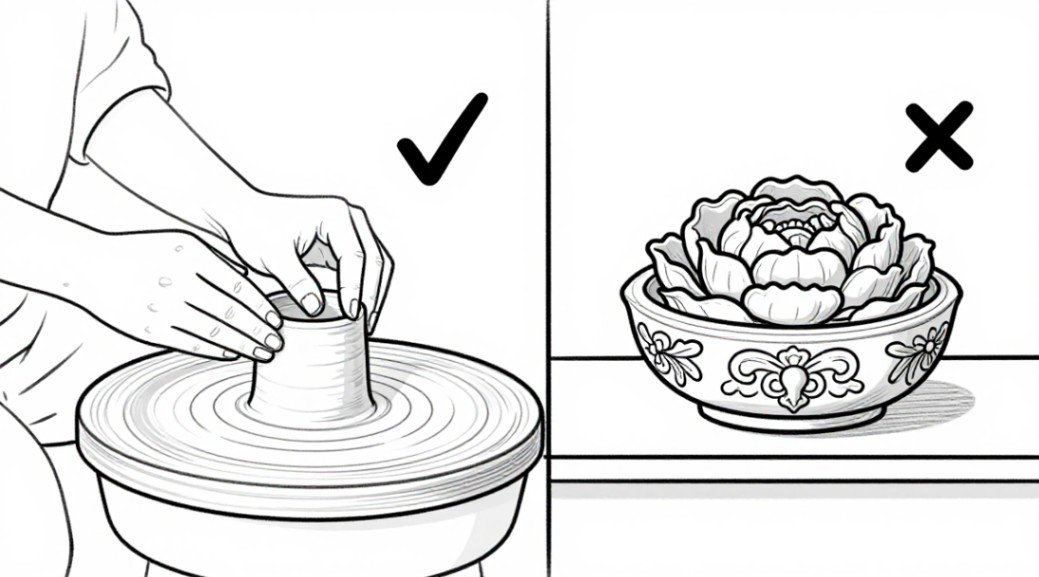
This leads to the broader danger of rushing the learning process itself. Ceramics, and peony decoration in particular, is a language of its own. Bypassing the necessary practice in brush control, glaze application, and firing schedules is like trying to write a novel before learning grammar. The peony motif, with its layered petals and symbolic weight, demands practice. Sketch it. Paint it on newsprint. Paint it on dozens of test tiles. Allow yourself the time to build muscle memory and intuitive understanding. Patience here is not a delay; it is the process of building a durable, lifelong skill set.
A disorganized studio directly hinders creativity and safety. Failing to establish a dedicated workflow from the start means you’ll spend more time searching for tools or cleaning up spills than creating. Designate zones: a wet area for throwing and glazing, a dry area for storage and design, and a safe, separate space for the kiln. Implement a system for managing clay scraps and glaze waste. This isn’t about sterile order; it’s about creating a space where you can focus entirely on the form of a peony ceramic vase, not on the chaos around it. A logical, safe workflow is the bedrock of productive creativity.
If you plan to sell, underestimating professional product photography is a severe miscalculation. A blurry phone picture in poor light cannot communicate the depth of a hand-painted peony ceramic plate or the luminous quality of a bone china peony tea set. Online buyers cannot hold your work. They rely entirely on images to judge quality, color, and scale. Invest in a simple lightbox, learn basic product photography, or hire a professional for your key pieces. Great photography makes the difference between a piece that is seen and a piece that is sold.
Overlooking legal and safety basics can stop a studio before it truly begins. This includes proper business registration if you’re selling, understanding the toxicology of your materials (like silica dust from clay and certain glaze powders), and having adequate ventilation and fire safety measures. Using a kiln in a garage without proper clearance or mixing glazes without a respirator are risks not worth taking. Protecting your health and establishing a legitimate business framework is the unglamorous, but absolutely essential, work that allows your art to thrive.
The Single Most Critical Action
With all these potential pitfalls laid out, the single most critical action you can take before your next project is this: Create a dedicated process journal. Do not rely on memory. In this journal, document every single variable for every piece or test batch: the exact clay body and its batch number, the precise glaze recipe and application thickness, the drying timeline, the kiln used, its firing schedule, and the placement of the piece inside the kiln. Then, photograph the results. This journal transforms your practice from a series of hopeful experiments into a structured, repeatable science. When you achieve that perfect blooming peony on a vase, you will know exactly how to do it again. When a glaze cracks, you can trace back and understand why. This habit of disciplined documentation is the thread that guides you through the complexity, ensuring your peony ceramics journey is one of consistent growth and flourishing beauty.
发表回复
要发表评论,您必须先登录。